Champagne Tasting at Home: How Many Bottles Do I Need?
Planning a Champagne tasting at home sounds simple until you’re standing in the wine shop wondering whether one bottle is generous or wildly optimistic. The answer depends less on the guest list alone than on the kind of evening you’re hosting: a focused tasting with small pours, a celebratory toast, or a relaxed dinner where glasses will be topped up.
A useful starting point is to plan by number of guests and decide how much each person will drink. A standard 750-milliliter bottle holds about 25 ounces of wine. That’s roughly five standard 5-ounce glasses, six 4-ounce pours, or about twelve 2-ounce tasting pours—with a little allowance for imperfect pours and the last glass.
This guide covers bottle quantities, bottle choices, storage, serving temperature, and how to open Champagne safely and quietly. No prices were provided in the scraped content, so the advice here is about quantities and planning rather than cost.
Start With the Pour, Not the Bottle
At a tasting, guests usually don’t need a full glass of every Champagne. Smaller pours make it easier to notice differences and leave room to revisit a favorite. For a casual tasting, pour 2 to 3 ounces per wine. For a toast, plan on 4 to 5 ounces per person. If Champagne will accompany dinner, expect some guests to have more than one glass.
As a practical rule, count on about ten to twelve 2-ounce tasting pours per bottle. If you’re pouring 3 ounces, allow for seven or eight pours. These are planning figures, not laboratory measurements: glass shape, pouring style, and the inevitable “just a splash more” all affect the yield.
How Many Bottles for Your Guest List?
Use the table as a starting point. The tasting column assumes one 2-ounce pour per guest from each Champagne in a flight. The toast column assumes one 5-ounce glass per guest. Add a spare bottle if the occasion is important, your guests are enthusiastic, or you’d rather avoid running short.
Guests One Champagne, tasting pour Three-Champagne flight One celebratory toast 4 1 bottle 1 bottle of each style 1 bottle 6 1 bottle 1 bottle of each style 2 bottles for comfortable coverage 8 1 bottle, with little room for a second pour 1 bottle of each style 2 bottles 12 2 bottles 1 bottle of each style, with modest pours 3 bottlesFor a three-wine tasting, the “three-Champagne flight” column assumes each guest receives a small pour of all three wines. A single bottle of each will generally cover a group of eight comfortably and may stretch to twelve with careful 2-ounce pours. For twelve guests, buying a second bottle of each style gives you more freedom to pour, compare, and revisit.

A Simple Bottle Formula
For one wine, divide the number of guests by the number of pours you expect from a bottle, then round up. For example, ten guests receiving one 2-ounce taste each will need about one bottle. If you plan to offer a second taste, two bottles are safer.
For a three-style flight, do that calculation for each wine. Eight guests receiving a 2-ounce pour of each Champagne need three bottles in total: one bottle per style. If you expect generous pours or seconds, plan on six bottles—two of each.
Choose Bottles for the Occasion
Match the lineup to the reason you’re gathering. A small birthday tasting may call for one bottle to share slowly, while a holiday dinner needs enough wine for the table and a little extra. If guests are arriving at different times, a second bottle keeps the tasting from turning into a rationing exercise.
- For a focused tasting: Choose two or three Champagnes with a clear contrast. A crisp, non-vintage brut alongside a richer vintage bottling can make the differences easy to discuss.
- For a toast: Choose a versatile brut that most guests will enjoy, and calculate at least one 4- to 5-ounce glass per person.
- For dinner: Consider the food and whether Champagne is the only wine. If it is, budget more than a single toast pour per guest.
- For a milestone: A special bottle can be the centerpiece, but consider having a second, more approachable bottle for opening and topping up.
One reliable tasting principle is to compare two styles before adding a third. For example, taste a fresh, fruit-forward non-vintage brut next to a more developed vintage Champagne. Or compare a blanc de blancs, made exclusively from white grapes, with a blanc de noirs, made from dark-skinned grapes. The point is not to turn the evening into a lecture; it’s to give guests an interesting contrast they can actually remember.
Laurent-Perrier is one producer you might encounter when looking for a familiar Champagne-house style. Whatever bottles you choose, look beyond the label’s prestige: consider whether each wine offers a distinct experience and suits the occasion. A thoughtful two-bottle comparison is often more rewarding than a crowded lineup of wines that all taste similar.
Store the Bottles Properly Before the Tasting
Champagne is sensitive to heat, light, and big temperature swings. If you’re storing bottles for more than a few days, keep them in a cool, dark place with a steady temperature—ideally around 45 to 55°F (7 to 13°C). A wine cellar is convenient, but a quiet interior cupboard away from an oven, radiator, or sunny window is better than a warm kitchen counter.
For short-term storage, the refrigerator is useful. A few hours before serving is generally enough to chill a bottle; overnight is also fine when you need to get ahead. Avoid leaving Champagne in the refrigerator for weeks, where it may dry out or pick up odors. Don’t put a bottle in the freezer to speed things up: it can freeze, expand, and create a mess or a safety hazard.
If bottles have been stored horizontally, handle them gently before opening, especially if they’re aged. Leave the bottles upright for a few hours when practical, so any sediment can settle. Most non-vintage Champagne is ready to enjoy when purchased; long-term aging at home is not necessary to have a good tasting.
Chill With a Thermometer, Not a Guess
Serving temperature has a noticeable effect on Champagne. Too warm, and the wine can seem soft, alcoholic, and overly foamy. Too cold, and the aromas and flavors become harder to pick out. Aim for approximately 45 to 50°F (7 to 10°C) for most non-vintage Champagne. A mature or particularly complex bottle may show better a little warmer, around 50 to 54°F (10 to 12°C).
A wine thermometer is handy, but you can also use a kitchen thermometer to check the bottle’s exterior or pour a small sample into a glass. The important point is accuracy: “cold” is not a precise temperature. If the bottle comes out of the refrigerator very cold, give it a few minutes on the table before pouring, then taste and adjust.
For a quicker chill, fill an ice bucket with a mix of ice and water. Water carries the cold around the bottle more evenly than ice alone. A bottle typically needs about 20 to 30 minutes in an ice-and-water bath, depending on its starting temperature. Keep the neck and foil clear enough to handle, and check the wine rather than relying only on the clock.
Open the Bottle Safely—and Quietly
A loud pop may suit a championship celebration, but it isn’t the goal at a home tasting. The classic, controlled opening releases less pressure abruptly, helps preserve the bubbles, and keeps the cork from becoming a projectile. A Champagne bottle can contain substantial pressure, so keep it pointed away from faces, windows, lamps, and anything breakable.
- Chill first. Cold Champagne is calmer to open than a warm bottle. Dry the bottle if it’s wet, so you can keep a secure grip.
- Remove the foil. Keep a thumb over the cork while loosening and removing the wire cage. Do not remove the cage without maintaining that pressure.
- Hold the cork securely. Place one hand over the cork and cage. Angle the bottle away from people, generally at about 45 degrees.
- Turn the bottle, not the cork. Grip the cork through a clean towel if needed. Slowly rotate the bottle with your other hand while keeping the cork steady.
- Let the pressure ease the cork out. Aim for a soft sigh rather than a bang. Keep a firm hold throughout; the cork can move suddenly, even when you’re being careful.
Don’t use a corkscrew, and don’t shake the bottle. If the cork is stubborn, keep the bottle pointed safely away and take your time. The aim is control, not a dramatic flourish.
Pour Small, Then Give Guests a Moment
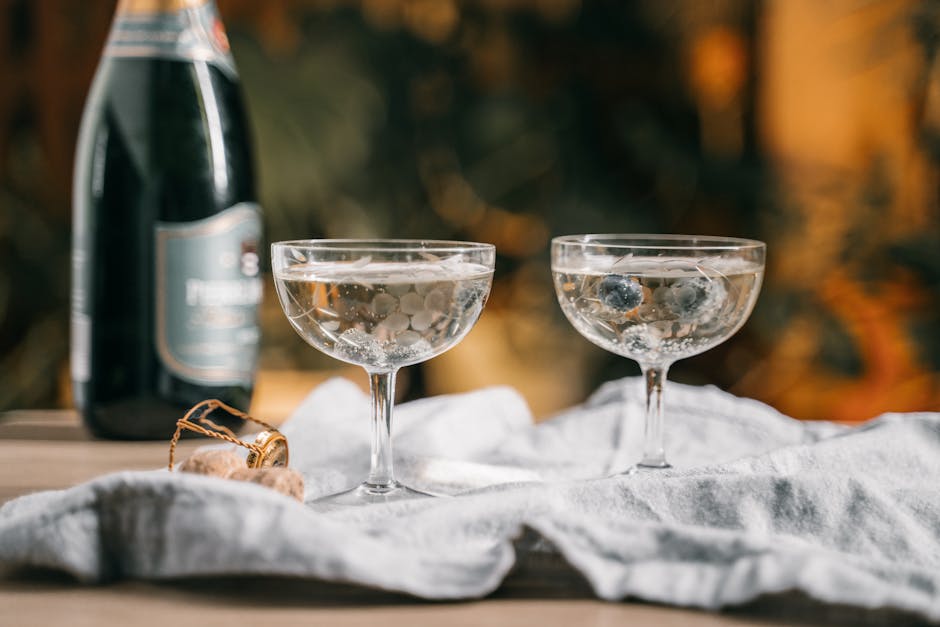
For a tasting, use clean glasses and best glass for champagne aroma serve smaller pours—about 2 ounces is a good place to start. Guests can swirl gently, smell, and taste without feeling obliged to finish a large glass before the next wine arrives. A tulip-shaped glass gives aromas room to develop while retaining bubbles; a standard white-wine glass also works well. Flutes are festive, but their narrow shape can make aromas harder to appreciate.
Pour each wine in the same order for everyone, and introduce the bottles before the first sip. Keep the comparison simple: ask what feels fresher, richer, more citrusy, or more toasted. You don’t need printed tasting sheets, although a small note card can help guests remember which bottle they preferred. If you share the lineup afterward on Pinterest or Facebook, include the bottle names and the serving temperature so friends can recreate the experience.
A Final Planning Checklist
- Decide whether the event is a tasting, a toast, or a dinner with Champagne.
- Count guests and calculate the pour size before buying.
- For a flight, choose bottles that offer a meaningful contrast.
- Buy an extra bottle when the occasion matters or refills are likely.
- Store wine away from heat and sunlight; use the refrigerator for short-term chilling.
- Serve most Champagne around 45 to 50°F and adjust for the wine’s age and style.
- Open slowly, with the cork controlled and pointed away from people.
In most homes, the best plan is straightforward: calculate by the pour, serve smaller amounts for a tasting, and keep one spare bottle if you want a relaxed evening. With the wine properly chilled and opened with care, even a modest lineup can feel generous—and give everyone something worth discussing.